
Move from isolated software evidence to a connected view of component relationships, deployed usage, repository origin and governance context.
SOFTWARE COMPONENT INTELLIGENCE
Understand software beyond installed-product inventory.
AssetUno connects binaries, DLLs, packages, dependencies, applications, hosts and artifact repositories to show what a component is, where it came from, where it is used and what risk or license context surrounds it.
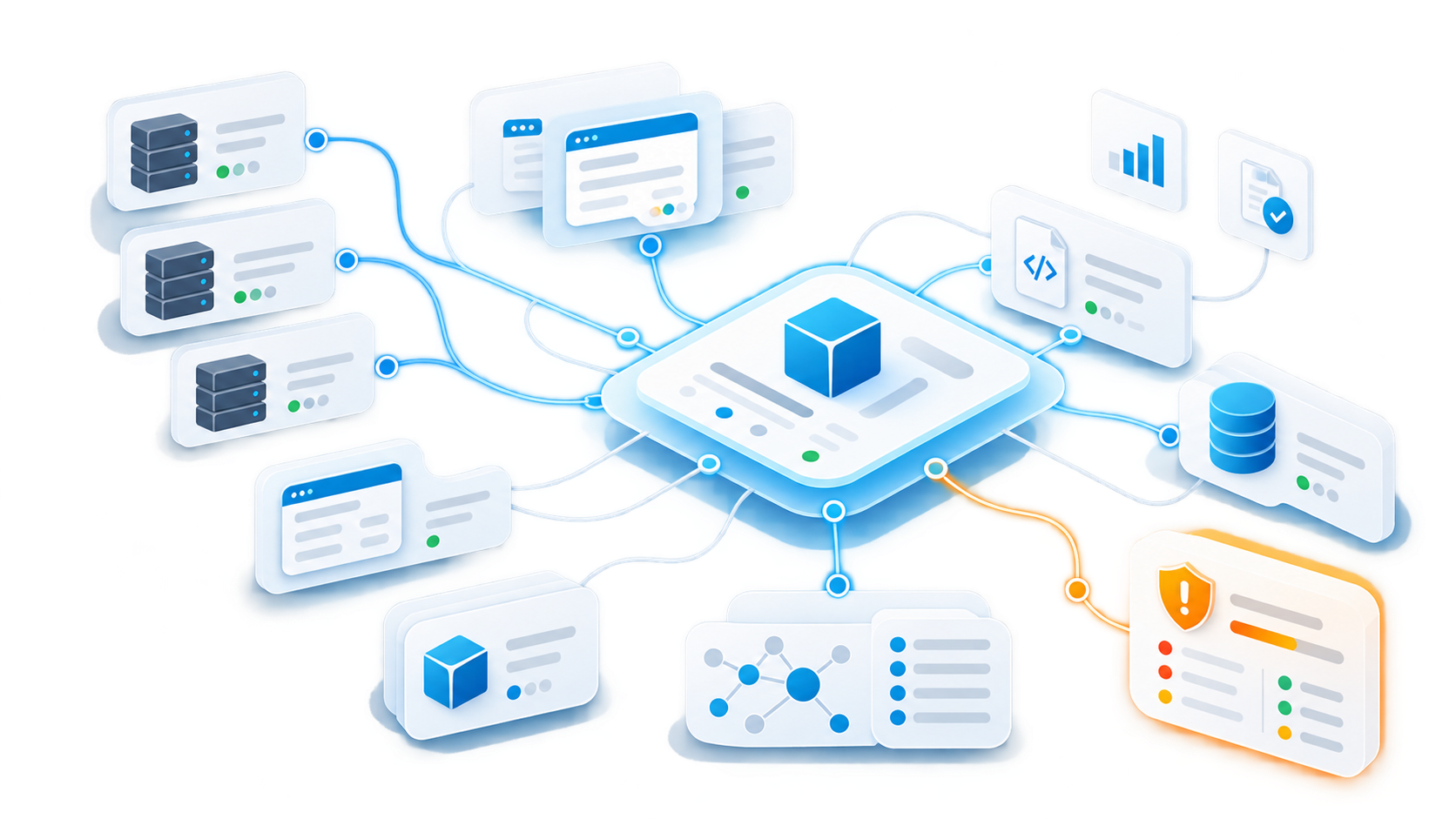
Connect the component to the environment around it.
AssetUno correlates software evidence across deployed systems and repository sources so teams can move from a file or package to real operational context.
Host
Where the evidence is discovered.
Application
The software context using the component.
Component
The binary, package, library or dependency being analyzed.
Repository
The package or artifact source behind the component.
Risk Context
Vulnerability, license, trust and ownership signals.
Turn low-level evidence into usable intelligence.
Traditional installed-product inventory can miss important technical evidence. AssetUno extends visibility into component-level data and the relationships around it.
Binary & DLL Evidence
Identify binaries and DLL evidence that traditional application inventory may not expose, then connect that evidence to the systems and applications where it appears.
Package & Dependency Metadata
Normalize package, version and dependency evidence across supported ecosystems and connect it with deployed software context.
Where-Used Relationships
See which hosts and applications use a component and which repository evidence is related to it, helping teams understand impact before change or remediation.
Evidence-Driven Review
Use evidence confidence, source trust, ownership and relationship context to support review instead of relying on isolated inventory records.
ARTIFACT REPOSITORY INTELLIGENCE
Connect repository packages to deployed component evidence.
AssetUno can bring repository and package intelligence into the same component model, helping teams understand where artifacts originate and how repository evidence relates to deployed systems.
Supported enterprise repository scenarios include JFrog Artifactory, Nexus Repository, GitHub Packages and GHCR, GitLab Registry, Harbor and Azure Artifacts, subject to the configured connector and permissions.
Repository evidence that stays connected.
Provider coverage and connection status Repository and package discovery Component reconciliation Repository trust context Background synchronization Progress and status visibility Controlled cancellation Evidence persistence and history
WHERE-USED & DEPENDENCY INTELLIGENCE
Understand impact before you act.
A component is rarely useful as an isolated inventory record. AssetUno builds relationships between components, dependencies, applications, hosts and repository sources so teams can see the operational footprint around a change.
Use where-used intelligence to understand which applications may be affected by a component version, which systems depend on it and where the same component appears across the environment.
Where is it used?
Trace a component to the applications and hosts where evidence shows it is used.
What depends on it?
Use dependency relationships to understand downstream impact and connected software context.
Where did it come from?
Relate deployed evidence to package and artifact repository sources where available.
What changes the priority?
What changes the priority?
Add vulnerability, license, repository trust and ownership context to the same relationship model.
Risk & License Context
Component intelligence becomes more useful when technical relationships are enriched with governance context. AssetUno can combine component evidence with vulnerability and CVE context, license classification, repository trust, ownership gaps and contract or entitlement information where supported.
The result is a more evidence-driven way to prioritize review and remediation instead of treating every discovered component as equally important.
EVIDENCE & RECONCILIATION
Keep repository and deployed evidence connected.
AssetUno reconciles evidence from discovery and connected repositories into a shared component model. This helps preserve provenance, confidence and relationship history as component data changes over time.
Instead of a one-time scan result, teams gain a connected evidence layer that can support review, synchronization and future governance decisions.
See Component Intelligence in your environment.
Explore your own component, dependency and repository scenarios and see how AssetUno connects deployed evidence to where-used, risk and license context.